



Arnau Puig. Philosopher and Art Critic
Coda, Resuming in Order to Move Beyond
One may wonder why a person feels the need to divide or duplicate themselves; one may also ask why, when this occurs, they feel compelled to take possession of certain procedures in order to succeed in expressing themselves. It seems to me that these two concerns bring us to the fundamental question of art in its most strictly contemporary sense. We call it art because perhaps now, for the first time in history, one can create the forms of one’s own reality without needing to resort to the forms of nature in order to deposit within them the anxieties and satisfactions that give cohesion and reality to a person’s emotional existence.
Jordi Urbón (Puigcerdà, 1962) comes to art because he wants to capture souls; has art not been, throughout its entire history, precisely this special instrument? Yet what was actually sought to be captured was the body, the support of the soul, because without this wrapping nothing else made sense: one existed because one was a reality. But now we are fully aware that we exist because we are sensations and feelings, and these are extremely difficult to retain directly.
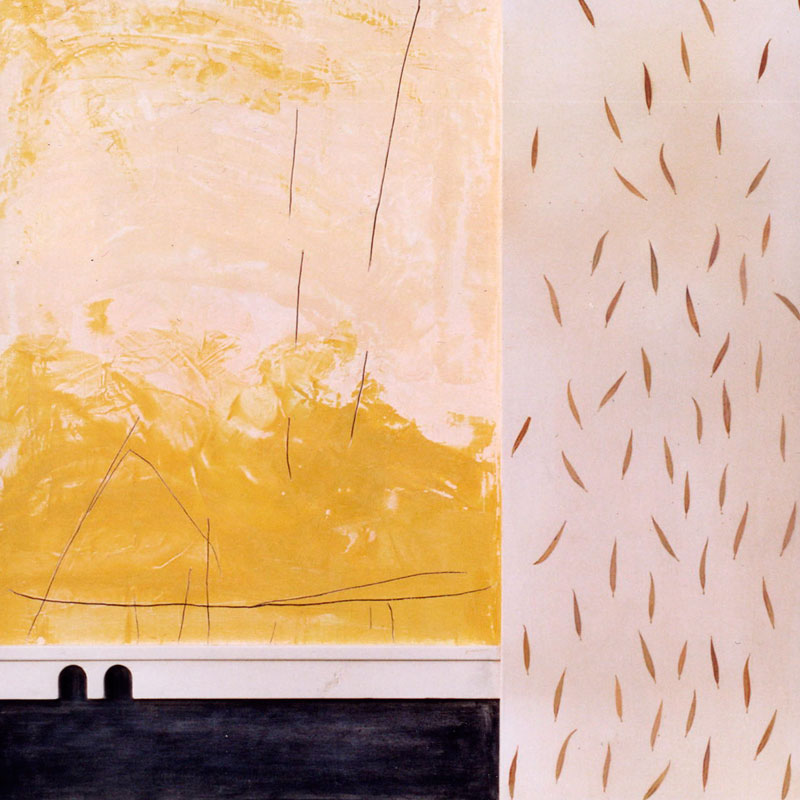
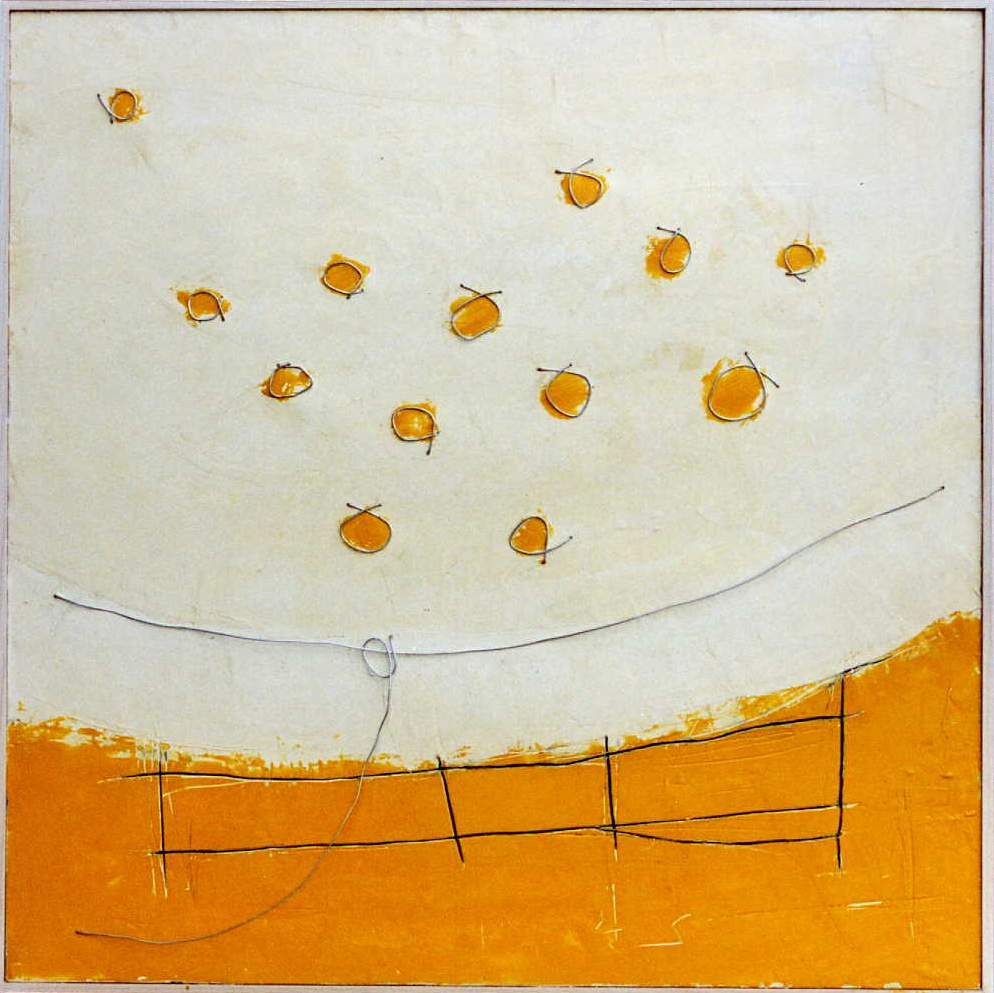
Urbón’s determining traits are an intensely heightened sensitivity, particularly open to whatever may affect the ear —one of the provocations of the soul— and which prompts immediate reactions in him, together with the need for procedures suited to responses that demand speed of execution, such as the technique of encaustic painting, which both allows and requires an aptitude for sudden response, in which material expression and gestural incision act almost simultaneously, and collage, which allows for spontaneous, progressive gesture without the need for reversals or subsequent additions.
After all this, here before us are his works: apparently fragile, delicate, messages of extreme subtlety in which the artist sees himself reflected as though they were a spectre of himself, at once fearful and joyful. As happens to a child after some mischief which he knows may be unpleasant or unwelcome to his family or to society, yet which the child —the person, if you will— has felt an absolute imperative to carry out, to accomplish, because what mattered most was to establish, if not identity itself, then at least that in the act —in this case, the plastic action— a free and individual existence identified itself and became involved.
From the outset, Urbón realised that the forms of things had to obey instinct and impulsiveness more than the social conventions of representation, because what needed to be shown in order to make the reality of the individual effective was not the established and accepted moulds but, precisely, that presence which makes each person unique, since every individual is a radical individuality.
Here we encounter Urbón’s particular forms of materialisation and enclosure, which are not what they seem, nor do they present themselves according to the social function expected of them. They are neither frames nor unusual or arbitrary enclosures, but outward manifestations of an inner vitality; nor are they showcases or display cases intended for exhibition —as a certain contemporary gesturalism has attempted— but rather hunters, protectors and shelters for souls, for the breath of things, or for one’s own acts, attitudes and actions. These emerge and seek to escape, yet if they were not captured, if they were not retained through the forms of art, we could never know what they are or how they exist. And this is necessary —here art finds its justification— in order to understand among which emanations, elements and impulses human beings coexist, with whom they live, while they feel, suffer and think.
The artist understands the work now before us —he already has a long career behind him— as being intimately bound to his real life and as its genuine plastic expression. Yet perhaps this very act of creation —Urbón, as Miró would say, works like a craftsman— has driven him, as a consequence of the work itself, to resume a similar path with different variations in musical language. For, if nothing else, simply by beginning something again, the repeated action upon what has already been given and established becomes different.
Not without reason had he called his earlier works polyphonies —perhaps because of his particular sensitivity to being disturbed and affected by sound— for they were repositories, attempts to capture supposed anatomies of the soul, the place where experiences begin and where the alterations that existence inflicts upon the individual become engraved. Urbón feels the need to retain them, to preserve them in these receptacles, in these boxes that he exhibits because they are works of art, but which, when they are not fulfilling this function, perhaps ought not to be present in reality, for they might begin to cry out, beginning once again the story of their captivity.
Let us look carefully at these boxes, which should be understood as containers of living idols, present beneath what are perhaps the most effective forms: those of art. The glass that allows their contents to become visible reveals things that are not symbolic but entities in themselves, possessing a being that is not metaphorical but present, through an impregnation of sympathetic transference. They already announce to us the fragility of emotion and representation, absolutely necessary for their impact to become effective. All these pieces are filled with sensitivity through their formal presence, and with mystery through their allusion to human suffering, both psychological and real, of which they are the expression.
These works now break free and seek realms of a more forceful presence; they wish to embody the reality of fears overcome. To present themselves as grand plastic orchestrations of art’s triumph over pain.
It is clear that this is not an escape. Rather, we should say that these works seek to manifest —as the great artists have already demonstrated— that a person truly becomes themselves when they transcend themselves through the joy of the artificiality of artistic expression. Shakespeare showed us this in King Lear; Urbón begins to make it evident at the opening of this “coda”. I find myself here again (in the materials, in the colours, in the forms), he seems to say, because I can no longer distance myself from it. I am here. And so are the others.